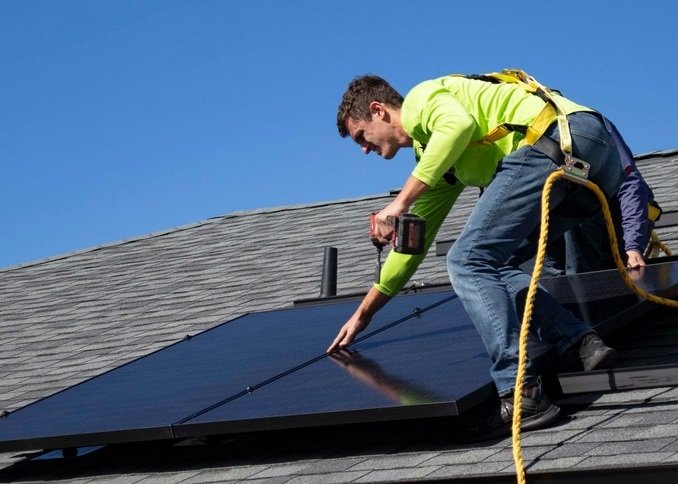
Step-by-Step Charlotte Solar Installation Timeline
Going solar in Charlotte follows a structured, predictable process. Here are the six key steps from your initial consultation to powering your home with clean energy in Mecklenburg County:
Consultation & Site Assessment
Duration: 1-2 days
Activity: Energy analysis, roof evaluation, shading study
Charlotte Specific: Review of Duke Energy solar potential data
Output: Custom system design & proposal
Design & Permitting
Duration: 2-3 weeks
Activity: Engineering plans, Mecklenburg County permit application
Charlotte Specific: Submission to Mecklenburg County Land Use
Output: Approved building & electrical permits
Equipment Procurement
Duration: 1-2 weeks
Activity: Order panels, inverters, mounting hardware
Charlotte Specific: Selection of Duke Energy-approved equipment
Output: All equipment delivered to your home
Physical Installation
Duration: 2-4 days
Activity: Roof mounting, electrical wiring, inverter setup
Charlotte Specific: Adherence to Charlotte's building codes
Output: Fully installed solar system
Inspections & Approvals
Duration: 1-2 weeks
Activity: County electrical inspection, Duke Energy review
Charlotte Specific: Mecklenburg County inspector visit, Duke Energy interconnection approval
Output: Permission to Operate (PTO) from Duke Energy
System Activation & Monitoring
Duration: 1 day
Activity: Final system commissioning, app setup
Charlotte Specific: Duke Energy net metering activation
Output: Live solar production & immediate savings
Charlotte Solar Permit Process Details
All solar installations in Charlotte require permits from Mecklenburg County Land Use & Environmental Services Agency (LUEsA). Here's what you need to know:
Mecklenburg County LUEsA
Permit Type: Residential Solar Photovoltaic System Permit
Application Method: Online via Accela Citizen Access Portal
Typical Fee: $450 - $750 (based on system size)
Required Documents: Site plan, electrical diagram, structural calculations
Contact: LUEsA Commercial Plan Review: (980) 314-CODE
Charlotte-Specific Requirements
Structural Review: Required for all roof-mounted systems
Historic Districts: Additional review if in historic district
Tree Protection: Compliance with Charlotte tree ordinances
Flood Zones: Special requirements if in flood zone
Energy Code: Must meet North Carolina Energy Code
Charlotte Solar Expedited Permitting
Eligibility: Standard residential systems under 20 kW
Process: Pre-approved plans for common roof types
Timeline: Permit issuance in 5-7 business days
Requirement: Installer must be NC Licensed Electrical Contractor
Benefit: Faster approval, predictable timeline
Charlotte City Inspection Requirements
After installation, your solar system must pass multiple inspections before receiving Permission to Operate (PTO) from Duke Energy:
Electrical Rough-In Inspection
Timing: After wiring, before wall/ceiling closure
Inspector: Mecklenburg County Electrical Inspector
Focus: Wiring methods, grounding, junction boxes
Code: National Electrical Code (NEC) + NC amendments
Result: Green tag if approved
Final Electrical Inspection
Timing: After full system installation
Inspector: Mecklenburg County Electrical Inspector
Focus: Complete system safety, labeling, disconnect switches
Critical Check: Rapid shutdown compliance (NEC 690.12)
Result: Final approval for electrical work
Duke Energy Interconnection Inspection
Timing: After County electrical approval
Reviewer: Duke Energy Solar Program Specialist
Focus: Net metering equipment, production meter
Requirement: Must use Duke Energy-approved bi-directional meter
Result: Permission to Operate (PTO) letter
Charlotte Inspection Tip:
Schedule your County electrical inspection through the Accela Citizen Access Portal. Most inspections can be scheduled within 2-3 business days. Your solar installer typically handles all inspection scheduling and coordination in Charlotte.
Duke Energy Connection Process
Duke Energy has specific requirements for connecting your solar system to the grid. Following their process ensures smooth net metering activation in Charlotte:
Interconnection Application
Form: Duke Energy North Carolina Interconnection Request
Timing: Submit with permit application
Requirements: System specifications, single-line diagram
Fee: $100 application fee (refundable after approval)
Approval Time: 15-20 business days
Equipment Requirements
Meter: Duke Energy provides bi-directional meter
Inverter: Must be UL 1741 SA compliant
Disconnect: Visible, accessible AC disconnect required
Labeling: Specific warning labels per Duke Energy standards
Monitoring: Production meter data accessible to Duke Energy
Duke Energy Net Metering
Program: Duke Energy Carolinas Net Metering
Rate: 1:1 kWh credit for excess generation
Benefit: Credit rolls over month-to-month
Annual Settlement: True-up each April
System Limit: 20 kW AC for residential
Charlotte Solar: Timeline from Quote to Activation
Understanding the complete timeline helps set proper expectations for your Charlotte solar project. Here's the typical schedule from start to finish in Mecklenburg County:
Complete Charlotte Solar Project Timeline
Weeks 1-2: Consultation & Design
Activities: Site assessment, energy analysis, proposal review
Decision Point: Sign contract, select equipment
Weeks 3-5: Permitting & Planning
Activities: Engineering plans, Mecklenburg County permit submission, Duke Energy application
Key Milestone: Permit approval from LUEsA
Week 6: Installation
Activities: Equipment delivery, roof mounting, electrical work
Duration: Typically 2-4 days of active work
Weeks 7-8: Inspections & Approval
Activities: County electrical inspections, Duke Energy review
Key Milestone: Permission to Operate from Duke Energy
Week 9: Activation & Monitoring
Activities: System commissioning, app setup, monitoring activation
Result: Solar production begins, savings start immediately
Explore More North Carolina Solar Information
Looking for solar information in other North Carolina cities or statewide programs?
View all North Carolina Solar Information